
The Rich and the Poor
The Man Who LaughsRepeated contrasts between aristocratic comfort and popular suffering lead Gwynplaine to attempt a public indictment of inequality.
increasing Bearing strength in each event
 decreasing
Bearing strength in each eventdecreasingPoverty in the Storm
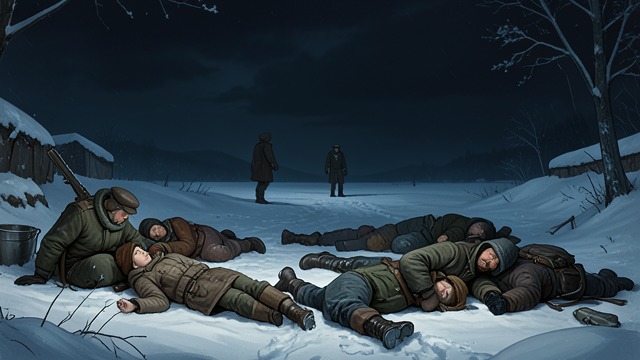
Poverty in the Storm
Winter’s victims
The opening recounts people dying of cold and hunger in England.
The winter makes poverty visible in public records and local memory.
Weather intensifies hardships produced by unequal resources.
A social backdrop
The abandoned child’s danger is one instance of wider deprivation.
The novel links individual survival to the conditions of the poor.
Public wealth and popular destitution occupy the same country.
Privilege Catalogued
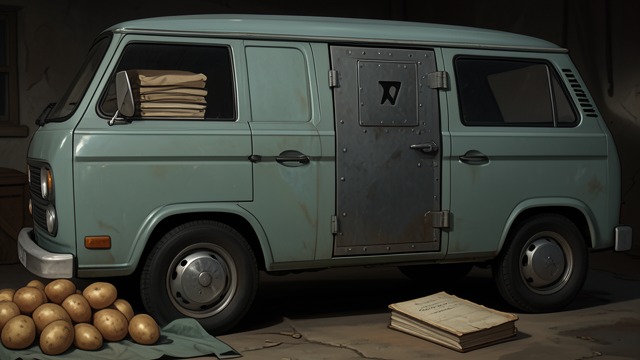
Privilege Catalogued
Rank made material
Ursus writes lists of peerage rules and aristocratic estates inside his van.
Their detail makes privilege concrete and measurable.
The poor traveller carries an inventory of another class’s wealth.
Satire through contrast
The information is set beside Ursus’s potatoes and uncertain income.
His apparent deference conceals criticism of inequality.
The lists prepare Gwynplaine to interpret what he later sees at court.
The Crowd’s Faces
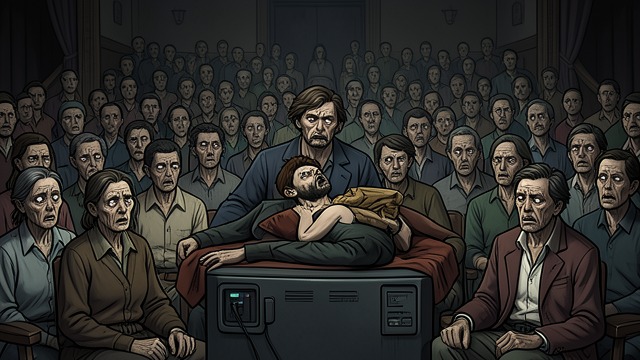
The Crowd’s Faces
Poverty enters the theatre
Gwynplaine studies the hungry, unemployed, and desperate spectators.
Their faces reveal the pressure of poverty and social exclusion.
The performer sees an audience that the audience itself cannot fully see.
Compassion grows political
His private happiness becomes troubled by the suffering around him.
He asks what can be done for the poor.
The question turns amusement into a possible form of testimony.
The People Addressed
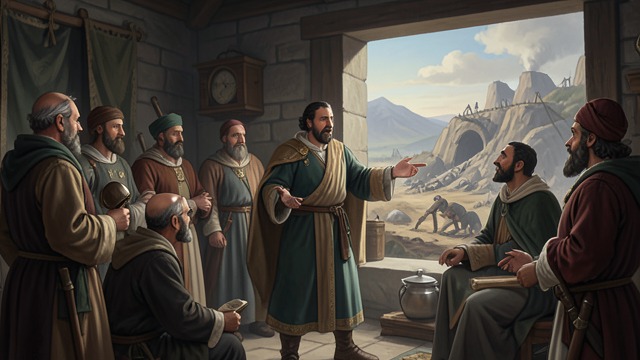
The People Addressed
Experience brought upward
Gwynplaine speaks of mines, hunger, disease, and punishment.
He argues from hardships he has witnessed rather than from policy abstractions.
His peerage gives the poor a temporary voice inside the chamber.
Privilege holds its ground
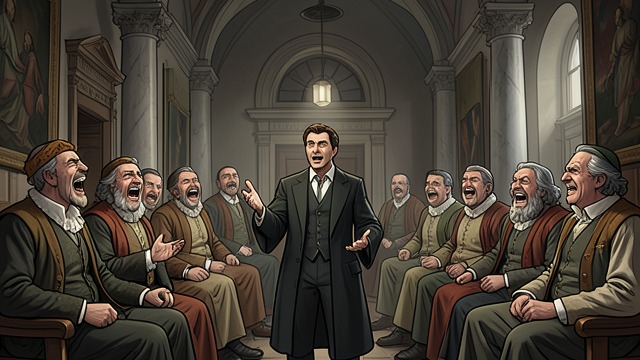
The Lords turn the speech into a joke.
Their laughter displaces the evidence without answering it.
The confrontation exposes the limits of representation without listening.
The System Named
The System Named
A broader accusation
Gwynplaine calls his face a sign of society’s treatment of mankind.
He connects royal violence, poverty, and forced cheer.
The personal body becomes an indictment of the political order.
Truth rejected as spectacle
The House laughs more loudly as his speech grows more serious.
His insight does not overcome institutional indifference.
The novel leaves social critique unresolved but unmistakable.
During the winter of 1689–1690
During Ursus’s years of wandering before 1705
During the Green Box shows in Southwark
At Gwynplaine’s first speech in the Lords
During Gwynplaine’s final address to the Lords
